Before anyone draws a floorplan, an office project faces a structural decision: one partner for everything, or a designer and a contractor appointed separately. The choice shapes your programme, your budget certainty, and who answers the phone when something goes wrong. This article sets out both routes honestly, including where the traditional path still earns its place.

The two routes, in plain terms
Under traditional procurement, you appoint a designer or architect first. They develop the scheme, produce a tender pack, and several contractors bid to build it. You then hold two contracts: one with the designer, one with the winning contractor, with the designer often inspecting the contractor’s work on your behalf.
Under design and build, one company carries the whole project. The same firm surveys, designs, prices, and builds, under a single contract with a single point of accountability. Most office fit outs and refurbishments in the UK now run this way, and is predominantly the main service offering Rap Interiors deliver.
Where design and build wins
Speed
The traditional route runs in sequence: design, then tender, then build, with a pause of weeks while bids come in and get compared. Design and build overlaps the stages, so pricing develops alongside the design and procurement of long-lead items starts early. On a typical office project the single-partner route saves weeks, sometimes months.
Cost certainty
When the designer and the builder work for the same company, the scheme is priced as it develops, and affordability problems surface on paper rather than at tender. The traditional route’s painful moment, when bids come back over budget and the design goes back for value engineering, largely disappears.
Accountability
Two contracts create a gap, and problems live in gaps. When a detail on site doesn’t match the drawing, a traditional project can descend into designer and contractor pointing at each other while you hold the delay. Under design and build there is nowhere to point. One firm owns the outcome.
Design intent that survives the build
Value engineering under traditional procurement happens after the design is finished, often stripping out the details that made the scheme work. Under design and build, cost and design develop together, so the trade-offs are made with the designer in the room rather than after they have left it.
Where traditional procurement still earns its place
Honesty matters here. The largest and most technically complex projects, listed buildings needing specialist conservation architects, and organisations whose governance requires competitive tendering, such as some public bodies, all still suit the traditional route. The separate designer also acts as an independent check on the contractor, which some boards value in itself. If your project fits those descriptions, a traditional structure with a strong project manager remains a sound choice.
For the typical office fit out or refurbishment, the calculation lands the other way. While these projects are well understood, the main risk is coordination, not invention. The traditional route adds time and friction without giving you much that a reputable design and build firm doesn’t already deliver.
Questions that keep either route honest
- Who exactly will design my scheme, and will they stay involved through the build?
- How is the price built up, and what happens if the design changes after sign-off?
- Who manages landlord consent, building regulations, and health and safety?
- Can I speak to two clients whose projects finished in the last year?


 https://www.rapinteriors.co.uk/wp-content/uploads/2024/05/Private-executive-offices-in-London-office-fit-out-with-polished-concrete-floor-750x500.jpg
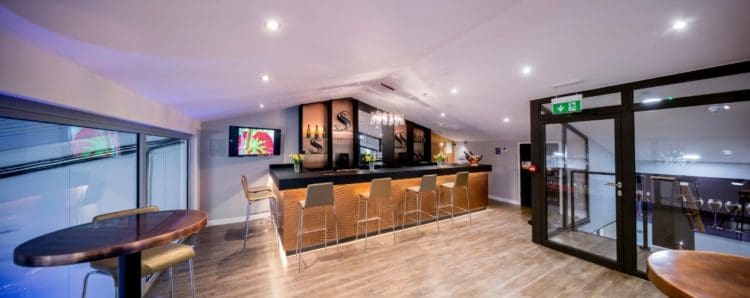
Private executive offices in London office fit out with polished concrete floor.