

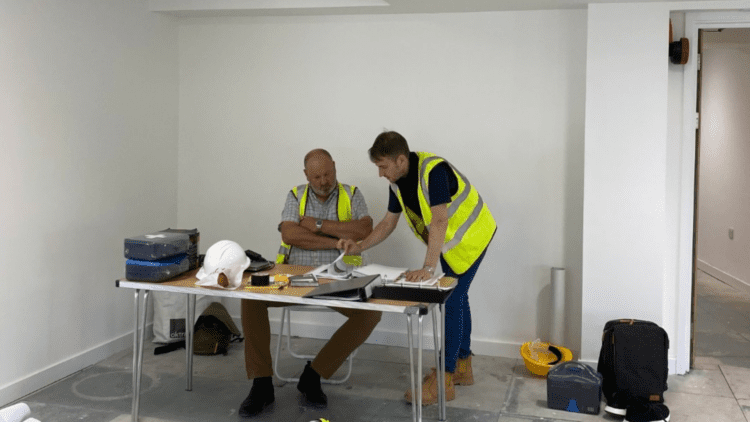
 https://www.rapinteriors.co.uk/wp-content/uploads/2024/09/What-is-a-Principal-Contractor-in-Construction-750x422.png
Principal contractor site meeting with site manager on an office refurbishment project.
https://www.rapinteriors.co.uk/wp-content/uploads/2024/09/What-is-a-Principal-Contractor-in-Construction-750x422.png
Principal contractor site meeting with site manager on an office refurbishment project.
A principal contractor plays a key part in the construction phase of a project. From developing a work programme to directing the site trades and ensuring health and safety, the principal contractor holds a lot of responsibility.
To give you a better understanding of the principal contractor’s role, we explore the core duties involved. This will give you confidence knowing their key responsibilities when embarking on your project.
We also look at the roles of other key figures in relation to the principal contractor, such as the client, principal designer, contractors, and subcontractors. This will give you a full picture of how a construction project works in terms of the chain of command.
So, if you’re struggling the construction terminology, this is the article for you. Let’s take a closer look at the role of a principal contractor…
https://www.rapinteriors.co.uk/wp-content/uploads/2024/09/What-is-a-Principal-Contractor-in-Construction-750x422.png
Principal contractor site meeting with site manager on an office refurbishment project.
Appointed by the client, a principal contractor (aka main contractor) has overall control of a project’s construction phase. This involves planning and coordinating construction works that involve more than one contractor.
For example, a refurbishment project typically requires multiple trades, who are contracted to carry out construction work. To ensure a successful project, the client will often appoint a refurbishment company with project management experience to oversee the trades on site.
In situations like this, the appointed refurbishment company is known as the principal contractor. The trades are generally referred to as contractors, or subcontractors if they are appointed by the principal contractor (learn more via point three).
Due to the complexity of construction projects, the principal contractor must have the necessary expertise to oversee the project. The principal contractor should also understand the latest health and safety regulations to prevent accidents during works.
Here is an overview of the principal contractors’ core duties and responsibilities:
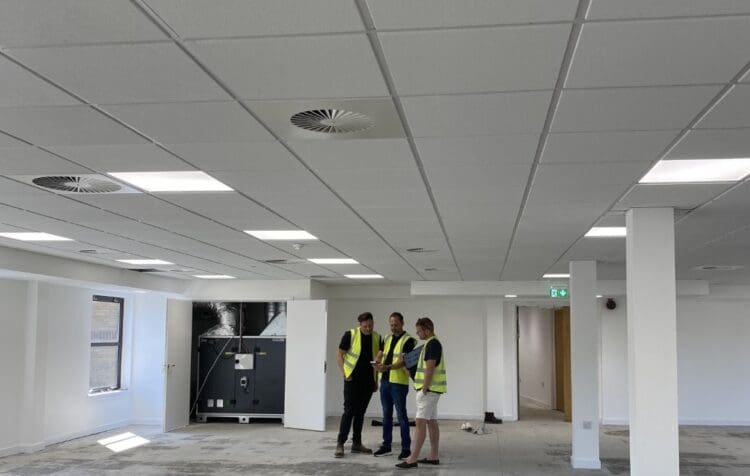 https://www.rapinteriors.co.uk/wp-content/uploads/2024/09/Principal-Contractor-site-meeting-for-offie-fit-out-project-e1725441909319-750x476.jpeg
Principal Contractor site meeting for office fit out project
https://www.rapinteriors.co.uk/wp-content/uploads/2024/09/Principal-Contractor-site-meeting-for-offie-fit-out-project-e1725441909319-750x476.jpeg
Principal Contractor site meeting for office fit out project
Understanding the difference between the three roles is key in helping you grasp the role of a principal contractor. Here’s an overview of how each role functions during an interior fit out or refurbishment project:
As we’ve identified, the principal contractor plans the construction works and directs the trades on site. Typically, the principal contractor will assign a project manager to oversee the work and serve as a point of contact for the client.
Principal contractors usually have a supply chain of tried-and-tested trades. During projects, the principal contractor will often appoint trades from this supply chain to undertake specific tasks, such as ceiling work or partition installations.
These trades, known as subcontractors, have a contract with the principal contractor, not the client. Therefore, they report to the principal contractor during works, rather than the client.
The benefit of this approach is that it saves clients the trouble of sourcing trades for the project. Providing the supply chain is properly vetted, this also reduces the chances of issues arising during works, which could lead to delays.
Sometimes, a client will source the trades to carry out work on the project. This means the trades will typically report to the client, rather than the principal contractor. They also hold a contract with the client, which explains why they are simply called “contractors”.
For example, if the client is managing its own office refurbishment project, it might choose to appoint separate contractors for the strip out, decoration, and flooring works.
If this is the case, the client becomes the principal contractor. This is fine if the client is competent at this and has had relevant training, but issues can arise from this situation if not managed correctly.
While many clients find their own contractors, they may still choose to appoint a principal contractor to oversee the works. This was the case for a fit out project Rap Interiors carried out for a London-based client.
Let’s take a look…
 https://www.rapinteriors.co.uk/wp-content/uploads/2024/05/Private-executive-offices-in-London-office-fit-out-with-polished-concrete-floor-750x500.jpg
Private executive offices in London office fit out with polished concrete floor.
https://www.rapinteriors.co.uk/wp-content/uploads/2024/05/Private-executive-offices-in-London-office-fit-out-with-polished-concrete-floor-750x500.jpg
Private executive offices in London office fit out with polished concrete floor.
Recently, Rap Interiors was appointed as principal contractor to help London design firm CircleSquare relocate to a new office in Whitechapel. With a design already in place, Rap sourced multiple trades to carry out the fit out work, while CircleSquare appointed one contractor independently to lay flooring.
On this occasion, Rap Interiors oversaw both its own appointed trades and CircleSquare’s flooring contractor. This required close collaboration with CircleSquare’s contractor and efficient project management to bring the design concept to life.
By appointing an experienced principal contractor to coordinate the project’s construction phase, CircleSquare was able to relocate without delay. See the results and learn more about the CircleSquare project here.
A principal contractor may be a refurbishment company chosen by a client to oversee a workplace transformation. A project manager, on the other hand, is assigned by the office refurbishment company to manage the planning and delivery of the construction works.
The project manager ensures the work is completed on time and within budget, organises logistics, and gives direction to subcontractors. The project manager also offers a single point of contact to the client, keeping them updated on the project’s progress and liaising when input is required from both parties.
Usually, the project manager is part of the main contractor’s in-house team. This enables clear communication between other parties who may be involved in the project, such as interior designers.
The principal contractor will have representatives on site throughout the works. For example, the principal contractor’s assigned project manager will frequently visit the site to coordinate the construction works. Likewise, a health and safety manager will often be present to carry out pre-construction safety briefings and monitor site activity.
Often, a principal contractor like a refurbishment company will have an in-house design team that is responsible for the visual and functional aspects of a project. The designers typically create a visual representation of the prospective workspace in the form of a 2D floorplan or 3D render.
The in-house design team should not be confused with the principal designer. Appointed by the client, a principal designer plans, manages, and monitors the pre-construction phase of the project. The pre-construction phase relates to everything leading up to the work starting on site.
A principal designer’s role is key in influencing how health and safety risks are managed throughout the project. As such, their responsibilities include liaising with the principal contractor and any other designers to highlight any risks that need to be controlled during the construction phase.
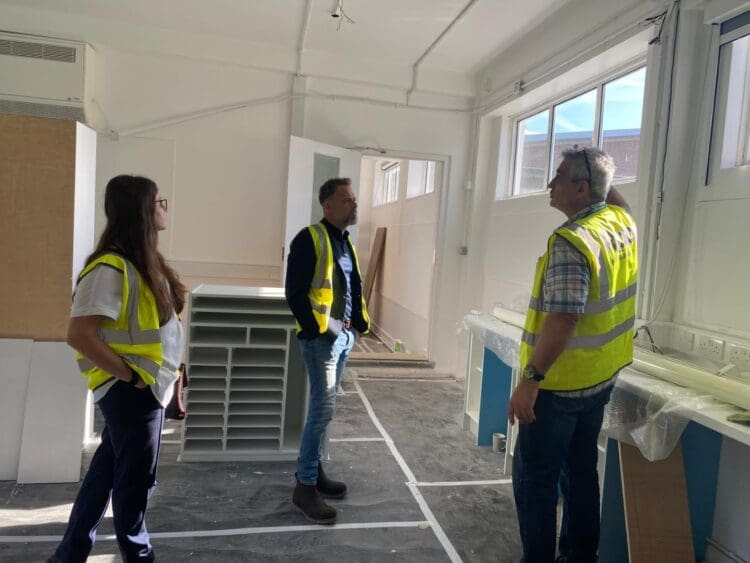 https://www.rapinteriors.co.uk/wp-content/uploads/2024/08/Site-visit-for-school-refurbishment-project-in-London-750x563.jpg
Site visit for school refurbishment project in London.
https://www.rapinteriors.co.uk/wp-content/uploads/2024/08/Site-visit-for-school-refurbishment-project-in-London-750x563.jpg
Site visit for school refurbishment project in London.
A principal contractor plays a critical role in ensuring health and safety during a project’s construction phase. Its responsibilities include the following:
Furthermore, a principal contractor should have excellent knowledge of the latest building regulations. These are a set of standards designed to protect people’s safety, health, and welfare in buildings.
If a building adheres to the government’s building regulations, it is considered compliant. This means it is safe, accessible to all, energy-efficient, and sustainable.
The 2015 CDM (Construction Design and Management) Regulations ensure that no-one is harmed during your proposed work. Although you (the client) aren’t expected to carry out work, you do have a responsibility for complying with the regulations.
If you do not comply with the CDM Regulations, you are failing to influence the management of health and safety on your project. Serious breaches could result in construction work being stopped by HSE or your local authority, and additional work may be required to put things right. In more serious cases, you could be prosecuted.
To ensure you adhere to the CDM Regulations, you should appoint a principal designer as early as possible. The principal designer focuses on health and safety during the project’s pre-construction phase. This requires careful planning to ensure the risks are effectively managed from start to finish.
Principal contractors should also display strong knowledge of CDM regulations, as they provide a framework to manage health and safety risks during construction. This facilitates a safe working environment throughout the construction phase.
Adhering to the CDM regulations not only protects workers, but also contributes to a smoother, more efficient project delivery. By lowering the risk of accidents, the principal contractor will, in turn, reduce the chance of delays.
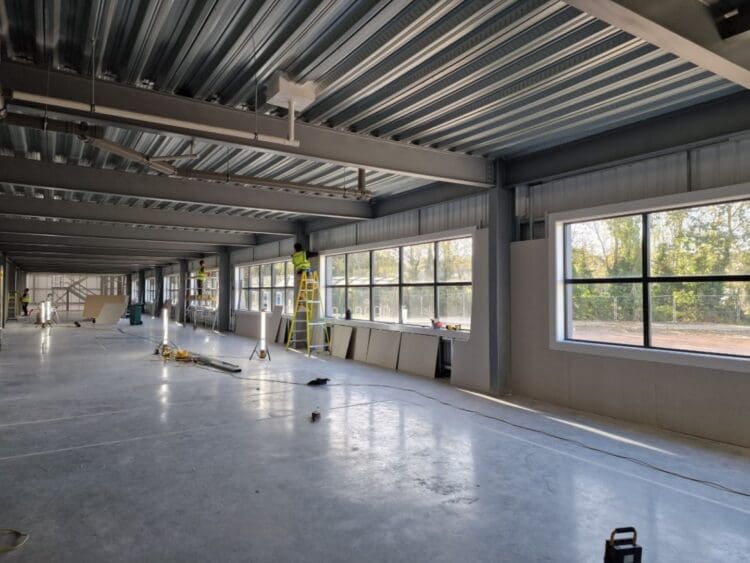 https://www.rapinteriors.co.uk/wp-content/uploads/2024/09/Industrial-fit-out-project-for-Albion-Fine-Foods-750x563.jpg
Industrial fit out project for Albion Fine Foods
https://www.rapinteriors.co.uk/wp-content/uploads/2024/09/Industrial-fit-out-project-for-Albion-Fine-Foods-750x563.jpg
Industrial fit out project for Albion Fine Foods
We’ve covered a lot of ground in the article so far. So, before we leave, here’s a recap and overview of the key figures involved in a construction project.
Remember, when embarking on a construction project, it’s important to fully understand the roles of everybody involved.
By clearly defining who is responsible for each element of the project, you will prevent any confusion and ensure the project runs smoothly from the get-go.
In summary, the client appoints a principal contractor to plan and manage the construction stage of a project. The principal contractor takes the lead in planning and coordinating all the construction activities, ensuring a seamless project that also meets health and safety requirements.
Now that you know the responsibilities of a principal contractor, we hope you feel more confident in embarking on your construction project. If you are going to appoint one, just make sure that they have knowledge of all the aspects we’ve covered here.
Then, you’ll be on the path to a successful fit out or refurb!
With 30+ years’ experience, Rap Interiors has a track record of overseeing sizeable and challenging construction projects. Acting as principal contractor, we have carried out work across London and the UK, helping clients to achieve stunning transformations on time, on brief, and within budget.
To book a consultation, please call our friendly client care team on 0333 600 1234 or fill out the form below.
Enter your details below and one of the team will contact you to discuss your requirements.
 https://www.rapinteriors.co.uk/wp-content/uploads/2024/07/Corporate-office-boardroom-design-in-office-refurbishment-in-Kings-Hill-Kent-750x500.jpg
Corporate office boardroom design in office refurbishment in Kings Hill, Kent.
https://www.rapinteriors.co.uk/wp-content/uploads/2024/07/Corporate-office-boardroom-design-in-office-refurbishment-in-Kings-Hill-Kent-750x500.jpg
Corporate office boardroom design in office refurbishment in Kings Hill, Kent.