

 https://www.rapinteriors.co.uk/wp-content/uploads/2024/02/Large-open-plan-office-breakout-space-with-expose-architectural-features-750x500.jpg
Large open plan office breakout space with expose architectural features.
https://www.rapinteriors.co.uk/wp-content/uploads/2024/02/Large-open-plan-office-breakout-space-with-expose-architectural-features-750x500.jpg
Large open plan office breakout space with expose architectural features.
According to recent news reports, UK employees could soon get the right to a four-day working week. The new law is being considered by the Labour party as part of their package for workers.
The new legislation, expected in Autumn, will mean employees can compress their regular hours into four working days rather than five.
With the government moving quickly on this, it’s important for businesses to anticipate how the changes could impact their operations and employees. This begs the question: what should firms do to ensure they are ready?
In this article, we consider that question in relation to the office environment. From lighting to furniture to aesthetics, we’ll look at how businesses can adapt their office interior design to support a four-day week.
But before we get into the office refurbishment tips, let’s look at the details of the four-day week…
With changes afoot, it’s important to know exactly how businesses will be affected. Here’s a brief overview of the current rules and how they will change:
While the change would initially mean “compressed hours”, director of the 4 Day Work Week campaign Joe Ryle called on political parties to back a reduction of maximum working week hours from 48 to 32 by the end of the decade.
With the initial plan to compress working hours, employees will have to get used to working longer days. This factor will likely prove key in determining how businesses should adapt their office design for wellbeing and productivity.
Employees will also have to manage their time differently, meaning businesses should do all they can to help them adapt to a new schedule. This includes investing in design elements that can support task management.
With these aspects in mind, we have outlined some ideas that will facilitate the transition into a four-day week. This will ensure employees perform well and, in turn, help businesses to maintain a level of efficiency for continued success.
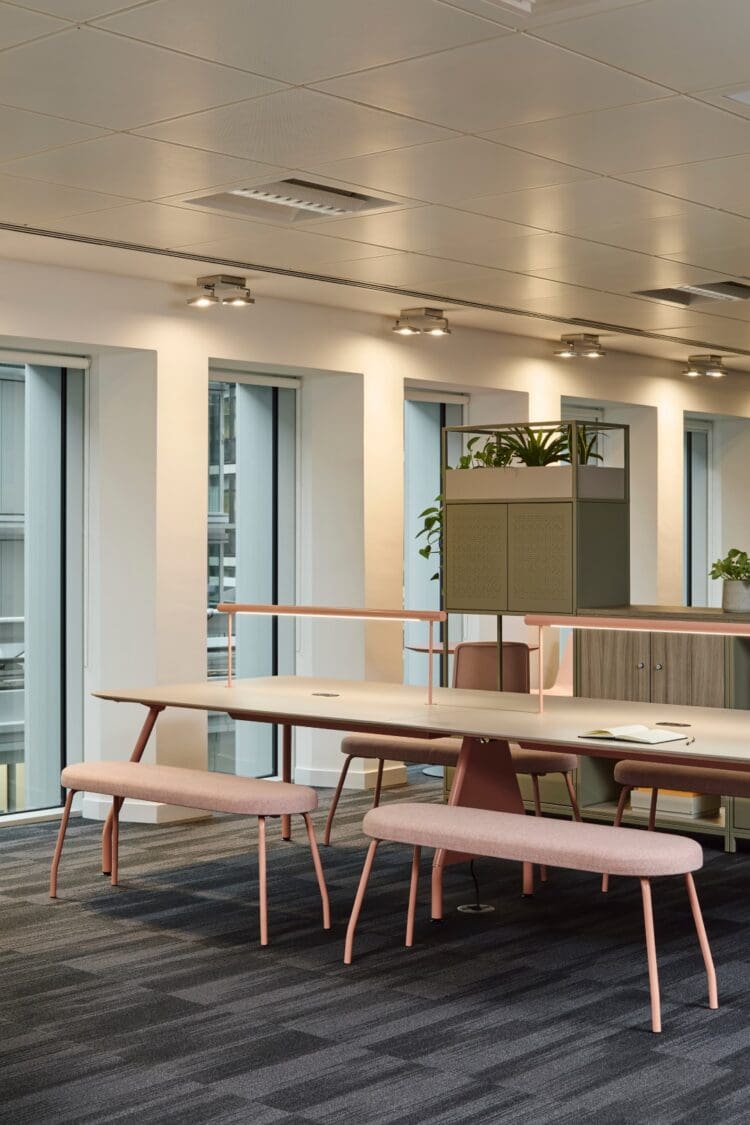 https://www.rapinteriors.co.uk/wp-content/uploads/2024/06/KI-Europe-modern-office-desk-with-integrated-lighting-750x1125.jpg
KI Europe modern office desk with integrated lighting.
https://www.rapinteriors.co.uk/wp-content/uploads/2024/06/KI-Europe-modern-office-desk-with-integrated-lighting-750x1125.jpg
KI Europe modern office desk with integrated lighting.
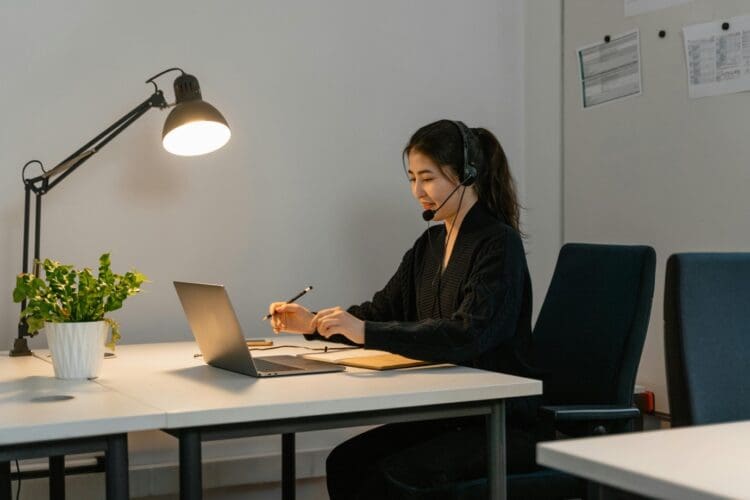 https://www.rapinteriors.co.uk/wp-content/uploads/2024/10/Task-lighting-at-office-desk-for-workspace-design-750x500.jpg
Task lighting at office desk for workspace design.
https://www.rapinteriors.co.uk/wp-content/uploads/2024/10/Task-lighting-at-office-desk-for-workspace-design-750x500.jpg
Task lighting at office desk for workspace design.
Given that working hours will be compressed into four days under the new scheme, employees may work earlier in the morning or later into the evening. Therefore, you should provide the right kind of light at the right time of day to help employees stay focused and productive throughout.
Here are some considerations:
Crucially, this will help to regulate the body’s sleep-wake cycle (known as the circadian rhythm). By mimicking the natural light and dark cycles, employees will enjoy better quality sleep that helps to reduce fatigue and increase alertness.
 https://www.rapinteriors.co.uk/wp-content/uploads/2024/10/Standing-desk-as-an-active-office-furniture-solution-750x500.jpg
Standing desk as an active office furniture solution.
https://www.rapinteriors.co.uk/wp-content/uploads/2024/10/Standing-desk-as-an-active-office-furniture-solution-750x500.jpg
Standing desk as an active office furniture solution.
Longer working days will also mean employees will spend more time sitting at their desks. According to the NHS, inactivity can lead to numerous health issues, so it’s a good idea to offer solutions that encourage activity.
One way to do this is to offer active furniture, which promotes a healthier lifestyle and combats the sedentary nature of office work. Here are some examples:
In addition to office furniture solutions, there are numerous small changes employees can make to be more active. For example, they can walk to a colleague’s desk rather than emailing, take a “walk break” when they make a coffee, or set a reminder to get up every 30 minutes.
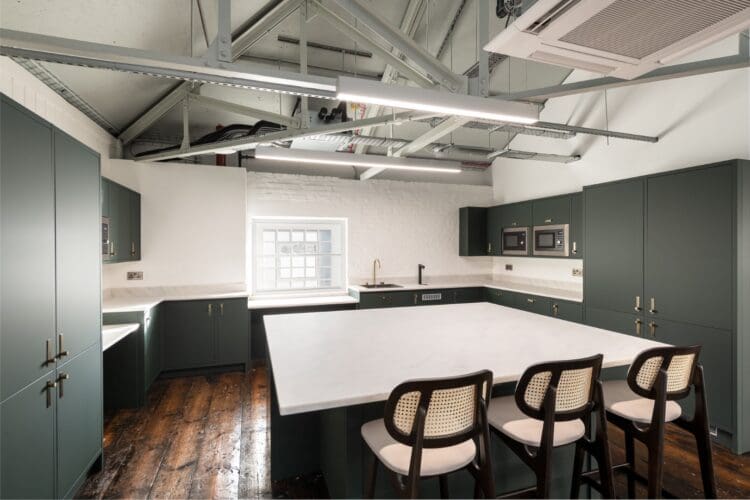 https://www.rapinteriors.co.uk/wp-content/uploads/2024/02/Office-kitchen-area-design-with-large-central-island-750x500.jpg
Office kitchen area design with large central island.
https://www.rapinteriors.co.uk/wp-content/uploads/2024/02/Office-kitchen-area-design-with-large-central-island-750x500.jpg
Office kitchen area design with large central island.
 https://www.rapinteriors.co.uk/wp-content/uploads/2024/02/Meetingbooth-and-individual-seating-in-open-plan-office-space-750x500.jpg
Meeting booth and individual seating in open plan office space.
https://www.rapinteriors.co.uk/wp-content/uploads/2024/02/Meetingbooth-and-individual-seating-in-open-plan-office-space-750x500.jpg
Meeting booth and individual seating in open plan office space.
 https://www.rapinteriors.co.uk/wp-content/uploads/2023/06/Albion-Fine-Foods-14-Large-750x500.jpg
Large open plan staff dining space part of a workplace design and fit out project in Kent.
https://www.rapinteriors.co.uk/wp-content/uploads/2023/06/Albion-Fine-Foods-14-Large-750x500.jpg
Large open plan staff dining space part of a workplace design and fit out project in Kent.
Compressed working hours mean employees will need plenty of energy to last until the end of the day. If they’re running low on energy, pushing through work may put a strain on their wellbeing and result in costly mistakes.
According to a Harvard Business Review article, the best way to help people to boost energy levels is to encourage short and long breaks. The shorter “micro breaks” are said to work best in the morning, while longer breaks are more beneficial in the late afternoon because fatigue worsens over the workday.
Here are some office design ideas to encourage short and long breaks:
The example images here provide great examples of wellbeing-friendly spaces that encourage breaks and support productivity. For more inspiration, check out the Ward Security and Albion Fine Foods project case studies.
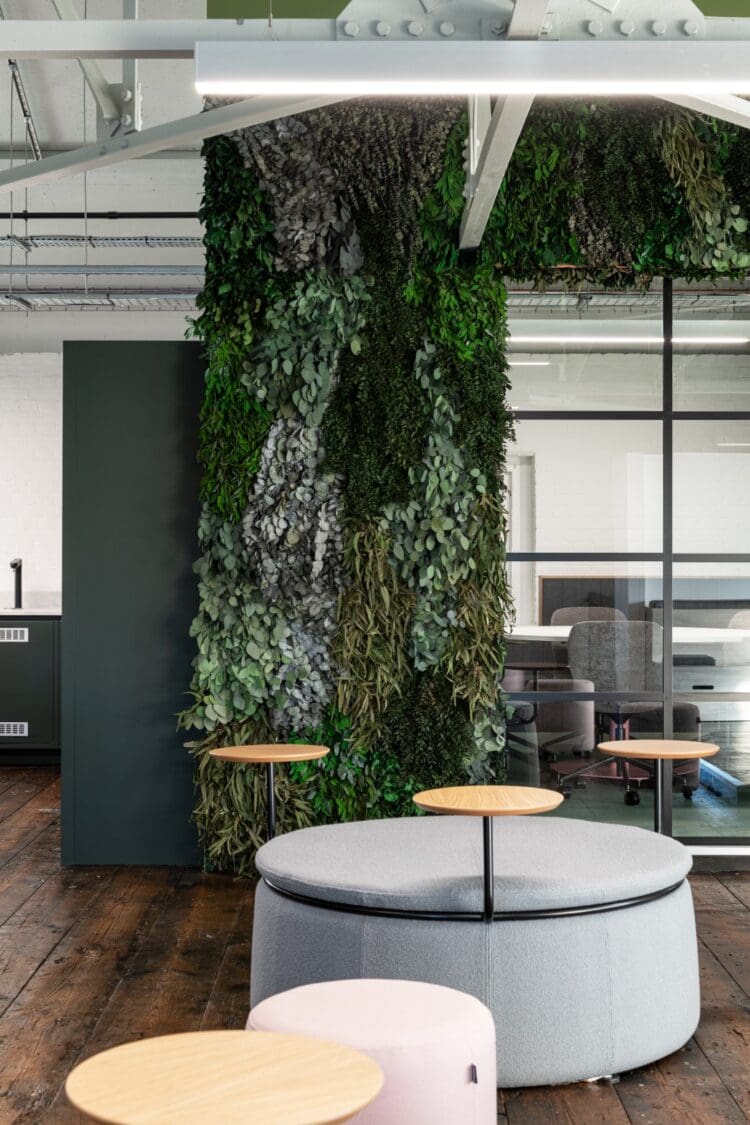 https://www.rapinteriors.co.uk/wp-content/uploads/2024/02/Biophilic-feature-wall-and-office-breakout-space-750x1125.jpg
Biophilic feature wall and office breakout space. Rap Interiors
https://www.rapinteriors.co.uk/wp-content/uploads/2024/02/Large-open-plan-office-breakout-space-with-expose-architectural-features-750x500.jpg
Large open plan office breakout space with expose architectural features.
https://www.rapinteriors.co.uk/wp-content/uploads/2024/02/Biophilic-feature-wall-and-office-breakout-space-750x1125.jpg
Biophilic feature wall and office breakout space. Rap Interiors
https://www.rapinteriors.co.uk/wp-content/uploads/2024/02/Large-open-plan-office-breakout-space-with-expose-architectural-features-750x500.jpg
Large open plan office breakout space with expose architectural features.
 https://www.rapinteriors.co.uk/wp-content/uploads/2024/02/Bleacher-seating-breakout-space-in-office-interior-design-project-750x500.jpg
Bleacher seating breakout space in office interior design project.
https://www.rapinteriors.co.uk/wp-content/uploads/2024/02/Bleacher-seating-breakout-space-in-office-interior-design-project-750x500.jpg
Bleacher seating breakout space in office interior design project.
At the heart of the four-day work week is employee wellbeing. By offering greater flexibility, businesses can boost morale and improve retention, which is ultimately good for business.
While the ideas we’ve given so far are more practical, it’s important to not overlook the aesthetic elements of the space. Here are some ideas that can establish a wellness theme with your office design:
By combining wellbeing-friendly design with a flexible work option, businesses will not only retain their best employees but attract new talent. This will drive growth and ensure you gain status as a forward-thinking company.
 https://www.rapinteriors.co.uk/wp-content/uploads/2023/11/Office-refurbishment-project-in-London-with-height-adjutable-desks-and-company-branding-1-750x500.jpg
Office refurbishment project in London with height adjustable desks and company branding.
https://www.rapinteriors.co.uk/wp-content/uploads/2023/11/Office-refurbishment-project-in-London-with-height-adjutable-desks-and-company-branding-1-750x500.jpg
Office refurbishment project in London with height adjustable desks and company branding.
If employees are working in an office over 10 hours a day, it’s a good idea to offer plenty of furniture so they aren’t restricted to one space. By offering a range of furniture and work zones, employees can switch to a more comfortable setting or one suited to a specific task.
Typical agile facilities include booths with power points, laptop lounges, hotdesking areas, acoustic pods, and lounges with soft furnishings. Additionally, some companies create “anchor points” where teams can congregate at the start of the day.
For a perfect example of an agile working environment, take a look at Hudl’s sports-themed office in North London.
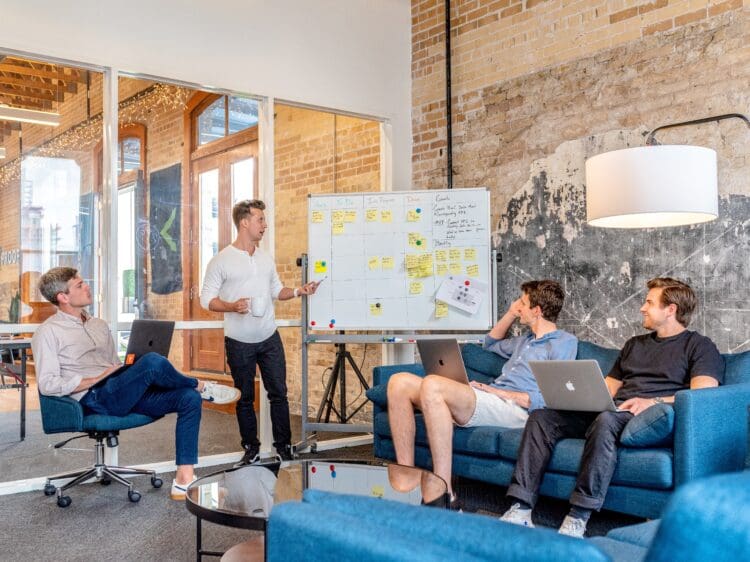 https://www.rapinteriors.co.uk/wp-content/uploads/2023/03/austin-distel-wD1LRb9OeEo-unsplash-750x562.jpg
Office breakout area and collaboration meeting area.
https://www.rapinteriors.co.uk/wp-content/uploads/2023/03/austin-distel-wD1LRb9OeEo-unsplash-750x562.jpg
Office breakout area and collaboration meeting area.
Without a fifth working day, employees may take a little while to adapt to the change. To help facilitate a smooth transition that also benefits the company, consider how your office design will support task management and productivity.
Key facilities for this include designated quiet spaces for deep work, whiteboards so they have a physical task list, and scrum zones for quick brainstorming sessions. These features may even help employees to be more productive than before, making for a shrewd investment.
Ultimately, if you create an office that employees love working in, then your transition to a four-day week will be a success. All the points we’ve covered here relate to improving the workplace experience, so keep that in mind when designing your space.
One more time, here is a summary of the points:
Also, don’t forget to invest in #ThursdayFeeling drinks fridge. Just because the last working day of the week isn’t Friday doesn’t mean you should forget to toast your hard work! In fact, it looks like Thursday could become the new Friday in the coming years.
With 30+ year’ experience, Rap Interiors is one of the leading office refurbishment companies in London and the South East. Our dedicated team of design and build experts can guide to you on best solutions to ensure a smooth transition into a four-day week.
To book a consultation, please call 0333 600 1234 or fill out the enquiry form below.
Enter your details below and one of the team will contact you to discuss your requirements.
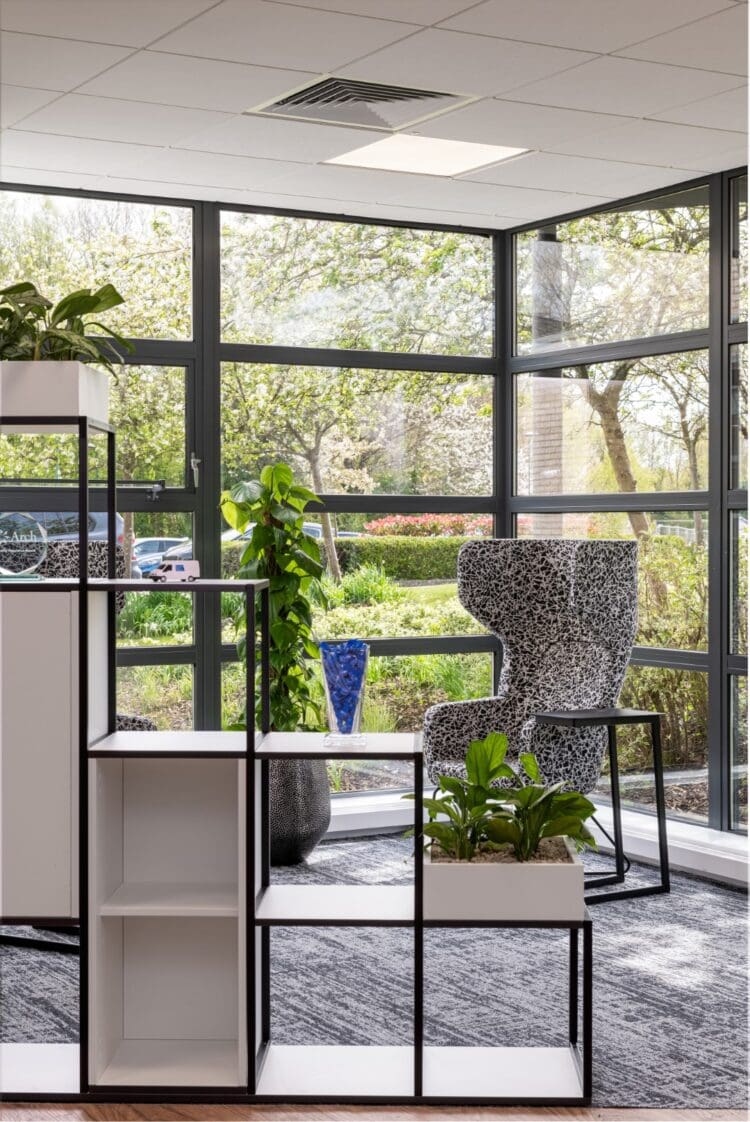 https://www.rapinteriors.co.uk/wp-content/uploads/2024/07/Tiered-office-storage-and-soft-seating-in-office-breakout-space-750x1122.jpg
Tiered office storage and soft seating in office breakout space.
https://www.rapinteriors.co.uk/wp-content/uploads/2024/07/Tiered-office-storage-and-soft-seating-in-office-breakout-space-750x1122.jpg
Tiered office storage and soft seating in office breakout space.