

 https://www.rapinteriors.co.uk/wp-content/uploads/2025/05/London-skyline-frameed-with-trees-and-green-space-Large-750x478.jpg
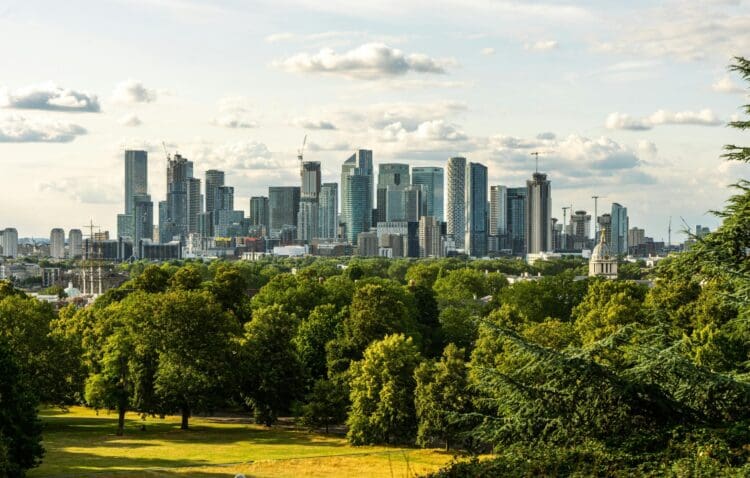
London skyline framed with trees and green space
https://www.rapinteriors.co.uk/wp-content/uploads/2025/05/London-skyline-frameed-with-trees-and-green-space-Large-750x478.jpg
London skyline framed with trees and green space
In an era where sustainability is becoming increasingly important, we’re witnessing a shift in the commercial office world. Rather than tearing down and rebuilding, many developers are now breathing life into existing structures.
As we will explore, this approach not only addresses concerns about climate change but could prove key in attracting future tenants whose priorities are changing.
Read on to learn more about office retrofitting…
 https://www.rapinteriors.co.uk/wp-content/uploads/2024/02/Biophilic-feature-wall-in-office-interior-design-project-for-Ward-Security-Kent-750x500.jpg
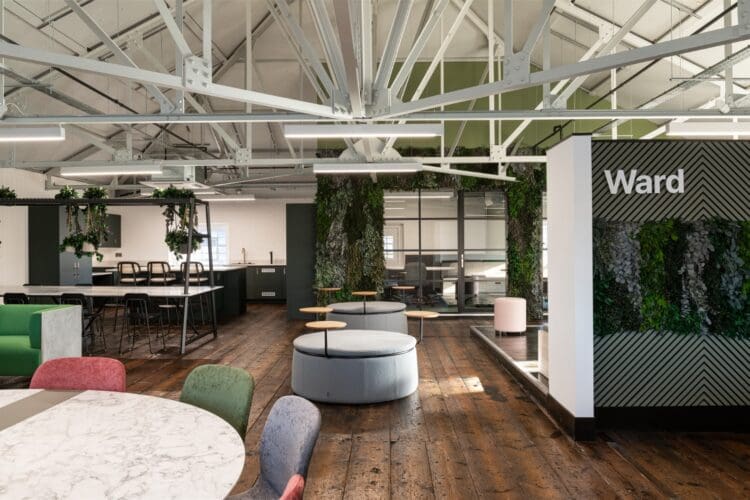
Biophilic feature wall in office interior design project for Ward Security, Kent.
https://www.rapinteriors.co.uk/wp-content/uploads/2024/02/Biophilic-feature-wall-in-office-interior-design-project-for-Ward-Security-Kent-750x500.jpg
Biophilic feature wall in office interior design project for Ward Security, Kent.
An office retrofit involves upgrading, modifying and repurposing existing office buildings. The aim is to meet current sustainability standards, improve energy efficiency and enhance functionality.
With office retrofitting, existing elements of a space are altered without the need for major demolition and reconstruction. This preserves existing features and minimises waste, reducing the environmental impact.
Retrofitting is generally carried out in older properties, including those that have “listed” building status. For developers, this represents an alternative to demolishing buildings to make way for new builds.
Elements of a space that are commonly upgraded during a retrofit include HVAC systems, lighting, insulation and acoustics (amongst other things). This work is often carried out by interior fit out contractors.
These days, some retrofits also involve smart technology integration, such as desk monitoring systems to track occupancy levels. These alert businesses to action when occupancy reaches a certain low, preventing unnecessary energy usage.
Learn more about desk monitoring systems here.
https://www.rapinteriors.co.uk/wp-content/uploads/2025/05/London-skyline-frameed-with-trees-and-green-space-Large-750x478.jpg
London skyline framed with trees and green space
Retrofitting is crucial in bringing buildings up to modern energy efficiency standards. In April 2018, the Minimum Energy Efficiency Standard (MEES) came into force to encourage commercial landlords to improve the energy efficiency of their properties.
Buildings must receive an Energy Efficiency Standard Rating of E or above, and developers that have a rating of F or G are penalised. In 2027, the minimum rating will rise from E to C. In 2030, this will rise again to B.
Buildings that do receive an adequate rating receive an Energy Performance Certificate (EPC).
Construction Enquirer recently reported that 65 Gresham Street in London is set for a significant retrofit. The £200m project will retain more than 70% of the existing building’s structure, with 95% of the materials recycled or re-used on site.
This sustainability-driven, reuse focussed development is likely a sign of things to come in London.
In March 2024, Westminster City Council set out new proposed planning policies on retrofitting. The new rules will mean developers must explore retrofitting before demolishing buildings.
The move is designed to accelerate commercial building upgrades to meet modern sustainability standards. The ultimate aim is to help the city become carbon neutral by 2040.
 https://www.rapinteriors.co.uk/wp-content/uploads/2024/02/Bleacher-seating-breakout-space-in-office-interior-design-project-1-750x500.jpg
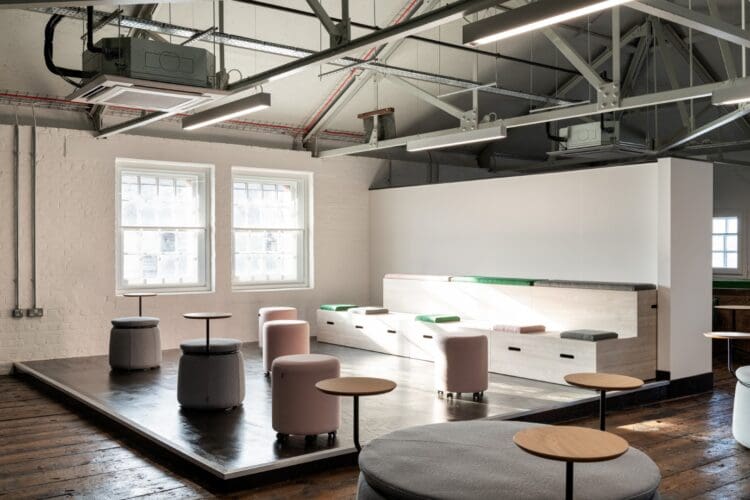
Bleacher seating breakout space in office interior design project. Rap interiors.
https://www.rapinteriors.co.uk/wp-content/uploads/2024/02/Bleacher-seating-breakout-space-in-office-interior-design-project-1-750x500.jpg
Bleacher seating breakout space in office interior design project. Rap interiors.
While the main driver of retrofitting is to improve energy efficiency and functionality, landlords may carry out interior design changes alongside the upgrades.
By improving aesthetics and introducing elements like breakout spaces and modern furniture, they can improve their chances of attracting a tenant.
For example, take a look at how our London interior designers created a vibrant, tenant-ready commercial office in Dartford. See the Riverbridge House interior design scheme here.
 https://www.rapinteriors.co.uk/wp-content/uploads/2025/05/Team-meeting-and-collaboration-in-modern-office-design-Large-750x500.jpg
Team meeting and collaboration in modern office design.
https://www.rapinteriors.co.uk/wp-content/uploads/2025/05/Team-meeting-and-collaboration-in-modern-office-design-Large-750x500.jpg
Team meeting and collaboration in modern office design.
According to a recent survey by LMG, over half (56%) of landlords said that tenants expect high environmental standards in their offices. This highlights a tenant priority for green spaces, driven by sustainability targets and a desire to attract top talent.
In addition to sustainability, the survey showed that tenants are putting more emphasis on employee experience, forcing commercial landlords to rethink their strategy.
For a relevant example, take a look at the recent office fit out of Ward Security in Kent. The office building, located at the historic Chatham Dockyard, required the adaptive reuse of various existing features and a redesign that had employee experience high on their list of priorities.
Related content: 6 Trends Shaping Commercial Office Design
 https://www.rapinteriors.co.uk/wp-content/uploads/2025/05/Hands-holding-seedlings-Large-750x500.jpg
Hands holding seedlings highlighting sustainability ethos.
https://www.rapinteriors.co.uk/wp-content/uploads/2025/05/Hands-holding-seedlings-Large-750x500.jpg
Hands holding seedlings highlighting sustainability ethos.
In 2023, JLL analysed the link between sustainable buildings and pricing in the Central London office investment market. With focus on two environmental building certifications (BREEAM and EPC), the research demonstrated that the market is attaching higher prices to more sustainable assets.
JLL’s research also shows that tenants are prepared to pay more to secure sustainable space, with buildings in London showing an average green premium of 11.6%. This reinforces the growing importance of sustainability not just as an ethical consideration, but as a significant driver of value and demand within the commercial property sector.
 https://www.rapinteriors.co.uk/wp-content/uploads/2025/05/Modern-London-office-building-Large-750x563.jpg
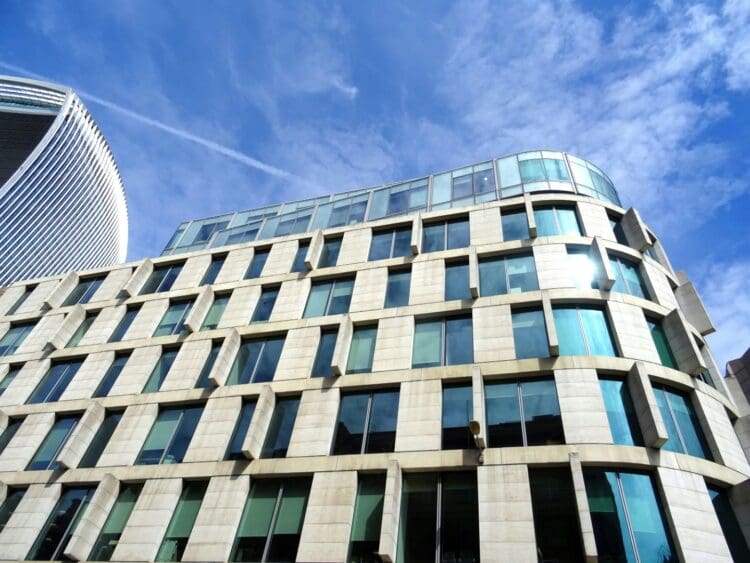
Modern London office building.
https://www.rapinteriors.co.uk/wp-content/uploads/2025/05/Modern-London-office-building-Large-750x563.jpg
Modern London office building.
As retrofitting a commercial building makes it more energy efficient, the knock-on effect of that is cost saving. By upgrading elements like insulation, HVAC systems and lighting, utility bills can be reduced significantly.
For an interesting case study, check out the UK Green Build Council’s “Building the Case for Net Zero” study. In the research, the UKGBC highlights the impact of retrofitting on a property in Birmingham’s central business centre.
Following initial action to address energy consumption issues, the electricity consumption reduced from a baseline of approximately 4800 kWh/day to 3800kWh/day (-20%) in November/December 2022. This equated to cost savings of more than £100,000.
Related content: How Sustainable is Your Office Design?
Our overview of the commercial market highlights the growing momentum of retrofitting. With eco-conscious policy shifts, changing tenant demands and large projects already taking place, we’ll undoubtedly see more building upgrades in the coming years.
Indeed, as the focus on sustainability intensifies, retrofitting will become vital in transforming exiting building stock into high-performing, future-ready workspaces. And by breathing life into older structures, we can create a more environmentally responsible and efficient built environment for generations to come.
Rap Interiors is a commercial office fit out company with 30+ years’ experience. If you would like to discuss the possibility of retrofitting an office space, we’d be delighted to hear from you.
To book a consultation with a member of our experienced project team, please call 0333 600 1234 or fill out the enquiry form below.
Enter your details below and one of the team will contact you to discuss your requirements.
 https://www.rapinteriors.co.uk/wp-content/uploads/2024/07/Corporate-office-boardroom-design-in-office-refurbishment-in-Kings-Hill-Kent-750x500.jpg
Corporate office boardroom design in office refurbishment in Kings Hill, Kent.
https://www.rapinteriors.co.uk/wp-content/uploads/2024/07/Corporate-office-boardroom-design-in-office-refurbishment-in-Kings-Hill-Kent-750x500.jpg
Corporate office boardroom design in office refurbishment in Kings Hill, Kent.