

 https://www.rapinteriors.co.uk/wp-content/uploads/2023/06/pexels-cottonbro-studio-5473956-750x500.jpg
Profile of femaile face with computer data projected onto her face, focusing on artificial intelligence in the work space.
https://www.rapinteriors.co.uk/wp-content/uploads/2023/06/pexels-cottonbro-studio-5473956-750x500.jpg
Profile of femaile face with computer data projected onto her face, focusing on artificial intelligence in the work space.
Back in 2020, businesses across the world faced a challenge that would change the office environment forever.
COVID-19 forced companies to adapt to a reduced workforce and, later, design for changing employee expectations.
Fast-forward to 2026, and businesses are subject to a new challenge that could force wide-scale office interior design changes.
Enter artificial intelligence.
The aim of artificial intelligence (or AI) is to create systems that can think and act like humans.
These systems can use algorithms to tackle challenging problems or streamline repetitive tasks, such as administrative duties.
https://www.rapinteriors.co.uk/wp-content/uploads/2023/06/pexels-cottonbro-studio-5473956-750x500.jpg
Profile of femaile face with computer data projected onto her face, focusing on artificial intelligence in the work space.
There is evidence that shows AI is beginning to reduce office headcounts, particularly among blue chip firms and banks.
For example:
While it seems AI will result in job losses, it’s unlikely there will be a “mass replacement” of all workers. Rather, we are seeing a targeted downsizing in roles that AI can do.
As the evidence shows, many companies that are embracing AI will eventually operate with a smaller workforce.
In fact, 20% of all tech layoffs in early 2026 are now officially tied to AI implementation and efficiency programs.
But this doesn’t necessarily mean businesses will move to smaller offices. The change isn’t the same as the forced remote work experiment we saw during the COVID-19 pandemic.
Instead, the change will likely see firms adapt their offices to accommodate human tasks that AI can’t do. As AI will handle routine tasks, the office will become more human-centric.
Here is how it could be split:
AI Tasks
• High-volume data management
• Repetitive administrative duties
• Entry-level knowledge work
Human Tasks
• Creative Brainstorming
• Strategic Thinking
• Impromptu Collaboration
• Mentorship or Group Learning
There is also the matter of in-office relationship building, which is key for morale and productivity.
So, how do you design a human-centric office in the age of AI? What will it look like?
Here are some ideas based on the ‘human tasks’ mentioned above:
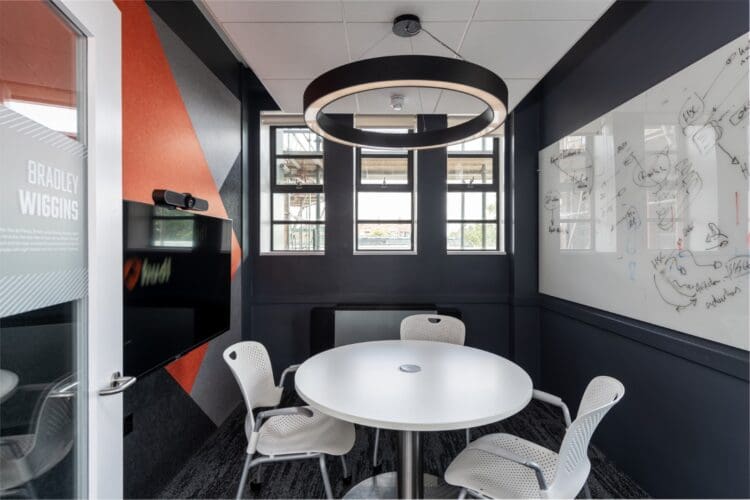 https://www.rapinteriors.co.uk/wp-content/uploads/2023/11/Private-meeting-room-in-London-office-refurbishment-project-with-feature-lighting-and-acoustic-panels-750x500.jpg
Private meeting room in London office refurbishment project with feature lighting and acoustic panels.
https://www.rapinteriors.co.uk/wp-content/uploads/2023/11/Private-meeting-room-in-London-office-refurbishment-project-with-feature-lighting-and-acoustic-panels-750x500.jpg
Private meeting room in London office refurbishment project with feature lighting and acoustic panels.
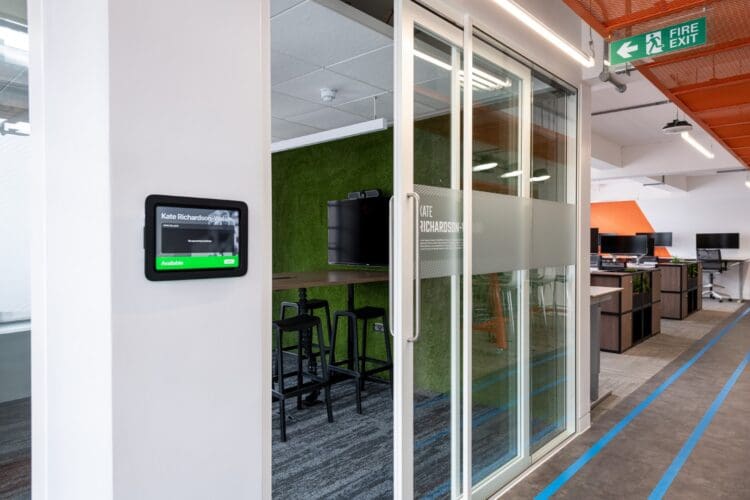 https://www.rapinteriors.co.uk/wp-content/uploads/2023/11/Glazed-fronted-meeting-room-with-branded-manifestation-in-London-office-refurbishment-750x500.jpg
Glazed fronted meeting room with branded manifestation in London office refurbishment.
https://www.rapinteriors.co.uk/wp-content/uploads/2023/11/Glazed-fronted-meeting-room-with-branded-manifestation-in-London-office-refurbishment-750x500.jpg
Glazed fronted meeting room with branded manifestation in London office refurbishment.
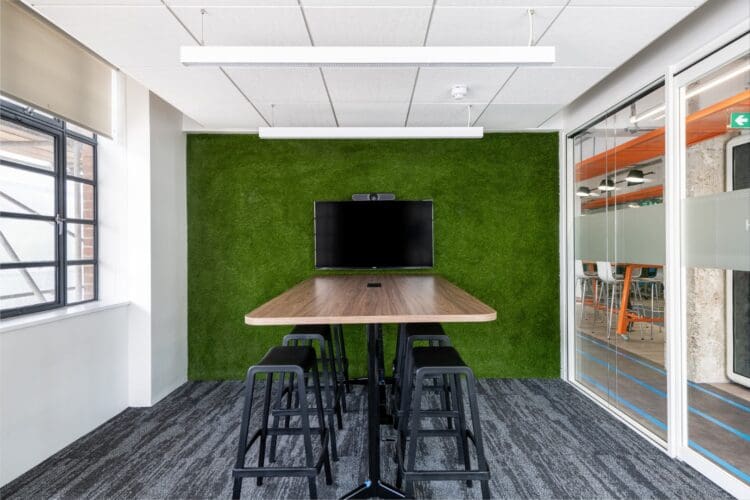 https://www.rapinteriors.co.uk/wp-content/uploads/2023/11/Meeting-room-in-modern-office-refurbishment-for-London-based-client-750x500.jpg
Meeting room in modern office refurbishment for London based client.
https://www.rapinteriors.co.uk/wp-content/uploads/2023/11/Meeting-room-in-modern-office-refurbishment-for-London-based-client-750x500.jpg
Meeting room in modern office refurbishment for London based client.
As an office interior design company, we know the importance of creative collaboration with colleagues. While chatbots are great for generating ideas quickly, they lack the ‘human spark’ that occurs when people occupy the same space.
Whatever sector you are in, it’s important to have a dedicated space where those creative sparks can fly. From idea sharing to informal meetings to discussions on brand direction, a brainstorming space can set the tone for creative collaboration.
Check out the Hudl office (above) for a great example. As part of the London interior design scheme, the sports data firm introduced numerous rooms for creative brainstorming.
As you can see, the vibrant designs emphasise that these are dedicated creative spaces. From the astro turf wall to the lively colours, the energetic designs not only reflect the Hudl brand but also demonstrate creative flair.
See more of the Hudl office here.
Related page: Office Collaboration Areas
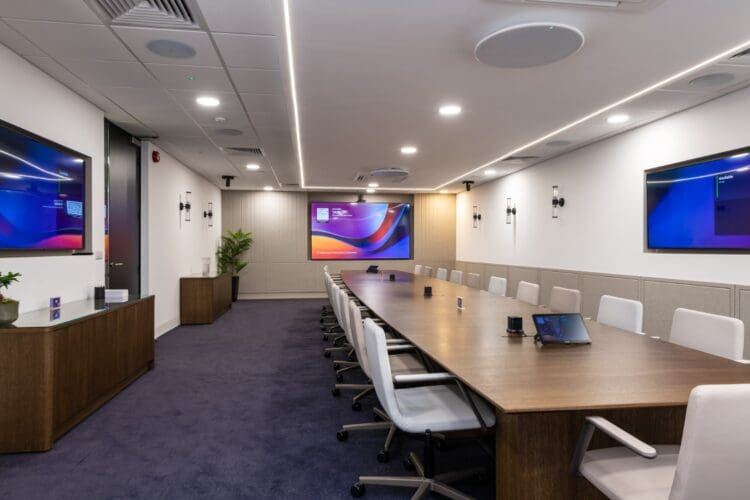 https://www.rapinteriors.co.uk/wp-content/uploads/2026/02/Boardroom-design-with-bespoke-boardtable-and-meeeting-chairs-for-London-office-refurb-750x500.jpg
Boardroom design with bespoke boardtable and meeeting chairs for London office refurb.
https://www.rapinteriors.co.uk/wp-content/uploads/2026/02/Boardroom-design-with-bespoke-boardtable-and-meeeting-chairs-for-London-office-refurb-750x500.jpg
Boardroom design with bespoke boardtable and meeeting chairs for London office refurb.
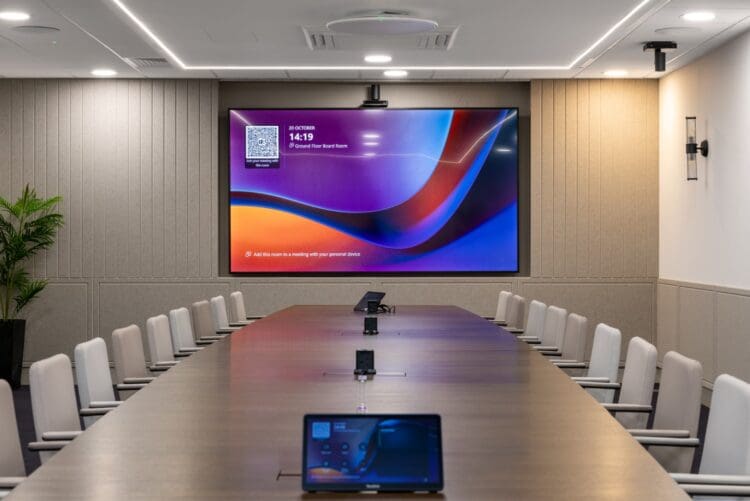 https://www.rapinteriors.co.uk/wp-content/uploads/2026/02/Modern-high-end-boardroom-interior-design-in-London-office-refurbiahment-750x501.jpg
Modern high end boardroom interior design in London office refurbiahment.
https://www.rapinteriors.co.uk/wp-content/uploads/2026/02/Modern-high-end-boardroom-interior-design-in-London-office-refurbiahment-750x501.jpg
Modern high end boardroom interior design in London office refurbiahment.
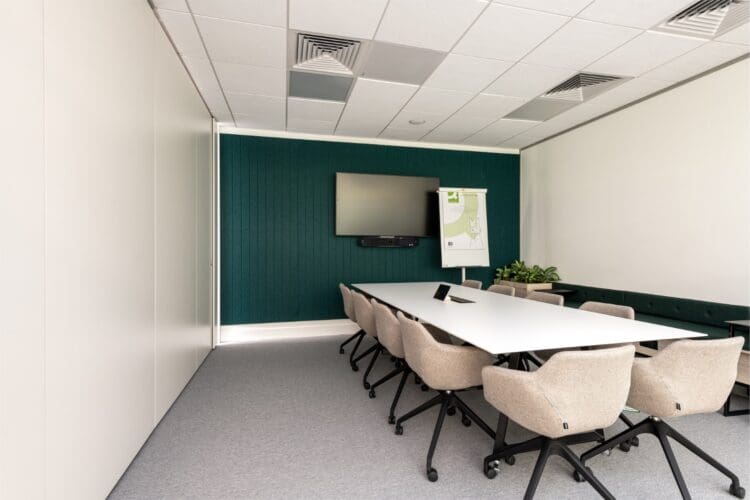 https://www.rapinteriors.co.uk/wp-content/uploads/2024/07/Office-boardroom-design-with-closed-operable-wall-750x500.jpg
Office boardroom design with closed operable wall.
https://www.rapinteriors.co.uk/wp-content/uploads/2024/07/Office-boardroom-design-with-closed-operable-wall-750x500.jpg
Office boardroom design with closed operable wall.
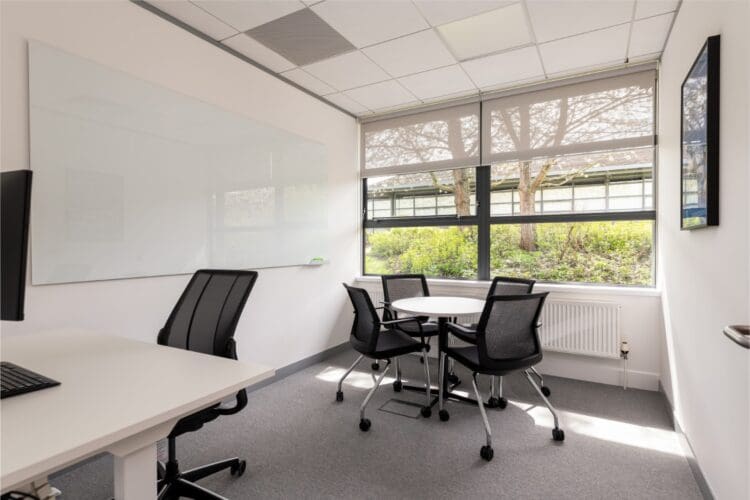 https://www.rapinteriors.co.uk/wp-content/uploads/2024/07/Hybrid-workspace-and-meeting-room-design-for-office-refurbishment-project-750x500.jpg
Hybrid workspace and meeting room design for office refurbishment project.
https://www.rapinteriors.co.uk/wp-content/uploads/2024/07/Hybrid-workspace-and-meeting-room-design-for-office-refurbishment-project-750x500.jpg
Hybrid workspace and meeting room design for office refurbishment project.
Likewise, AI can provide useful templates for business strategies, but the direction needs to come from key decision makers. That’s why it can also be advantageous to have dedicated rooms for strategic thinking.
In contrast to the creative brainstorming rooms, some companies like to set the tone for high-stakes meetings with a more conservative, ‘business first’ aesthetic.
Here are some ideas:
Want to see more ideas like this? Check out our article, ‘10 Corporate Office Design Ideas and Concepts’.
Further reading: Are You Doing Enough to Facilitate Deep Work?
 https://www.rapinteriors.co.uk/wp-content/uploads/2024/02/Office-breakout-area-for-Ward-Security-in-Kent-750x500.jpg
Office breakout area for Ward Security in Kent.
https://www.rapinteriors.co.uk/wp-content/uploads/2024/02/Office-breakout-area-for-Ward-Security-in-Kent-750x500.jpg
Office breakout area for Ward Security in Kent.
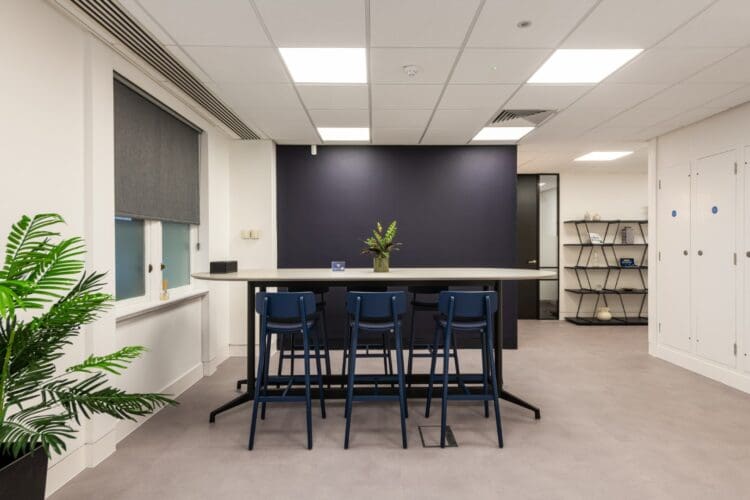 https://www.rapinteriors.co.uk/wp-content/uploads/2026/02/Office-breakout-space-in-London-office-refurbishment-project-with-modern-breakout-furniture-solutions-750x500.jpg
Office breakout space in London office refurbishment project with modern breakout furniture solutions.
https://www.rapinteriors.co.uk/wp-content/uploads/2026/02/Office-breakout-space-in-London-office-refurbishment-project-with-modern-breakout-furniture-solutions-750x500.jpg
Office breakout space in London office refurbishment project with modern breakout furniture solutions.
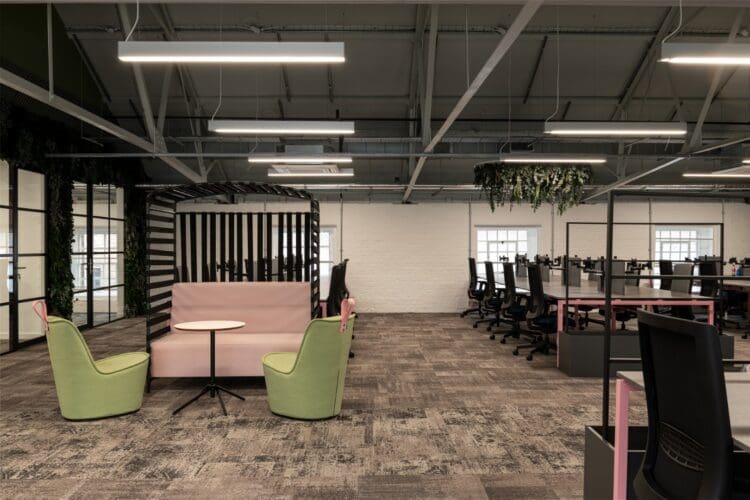 https://www.rapinteriors.co.uk/wp-content/uploads/2024/02/Open-plan-office-space-plan-with-modern-pink-and-green-office-furniture-solutions-750x500.jpg
London Interior Design Company - Rap Interiors
https://www.rapinteriors.co.uk/wp-content/uploads/2024/02/Open-plan-office-space-plan-with-modern-pink-and-green-office-furniture-solutions-750x500.jpg
London Interior Design Company - Rap Interiors
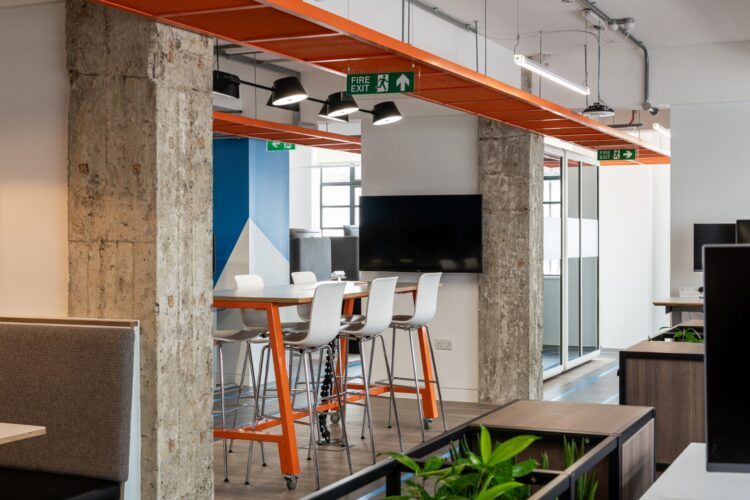 https://www.rapinteriors.co.uk/wp-content/uploads/2023/11/Industrial-features-in-branded-office-refurbishment-750x500.jpg
Industrial features in branded office refurbishment.
https://www.rapinteriors.co.uk/wp-content/uploads/2023/11/Industrial-features-in-branded-office-refurbishment-750x500.jpg
Industrial features in branded office refurbishment.
Sometimes million-dollar ideas come at the spur of the moment. That’s why it’s a good idea to provide plenty of opportunities for impromptu collaboration – even if it’s out in the open.
While AI is good for prompts and answering specific questions, an ad-hoc brainstorming area (like a high-top group table or lounge) foster a type of creativity it cannot match.
Furthermore, this type of spontaneous collaboration is a powerful driver for team building. The informal, ‘coffee-break’ style sessions allow employees from different departments to connect and strengthen the company’s overall cohesion.
Related content: Office Design Trends 2026
 https://www.rapinteriors.co.uk/wp-content/uploads/2023/06/Acoustic-meeting-booth-in-an-office-interior-design-and-fit-out-for-a-food-supply-company-in-Kent-750x500.jpg
Acoustic meeting booth in an office interior design and fit out for a food supply company in Kent.
https://www.rapinteriors.co.uk/wp-content/uploads/2023/06/Acoustic-meeting-booth-in-an-office-interior-design-and-fit-out-for-a-food-supply-company-in-Kent-750x500.jpg
Acoustic meeting booth in an office interior design and fit out for a food supply company in Kent.
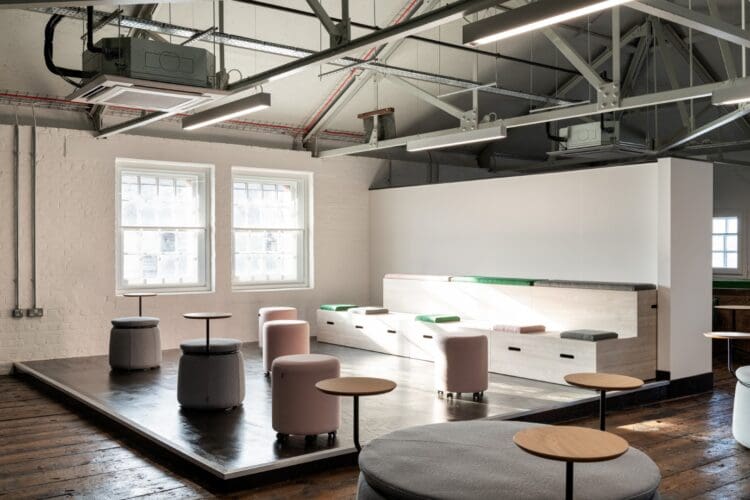 https://www.rapinteriors.co.uk/wp-content/uploads/2024/02/Bleacher-seating-breakout-space-in-office-interior-design-project-1-750x500.jpg
Bleacher seating breakout space in office interior design project. Rap interiors.
https://www.rapinteriors.co.uk/wp-content/uploads/2024/02/Bleacher-seating-breakout-space-in-office-interior-design-project-1-750x500.jpg
Bleacher seating breakout space in office interior design project. Rap interiors.
 https://www.rapinteriors.co.uk/wp-content/uploads/2023/06/Upper-floor-meeting-room-with-crittall-glass-partitions-and-green-poseur-stools-at-Albion-Fine-Foodsin-Dartford-Kent-750x500.jpg
Crittall glass partition for meeting room apart of the new refurbishment and fit out for Albion Fine Foods in Dartford Kent.
https://www.rapinteriors.co.uk/wp-content/uploads/2023/06/Upper-floor-meeting-room-with-crittall-glass-partitions-and-green-poseur-stools-at-Albion-Fine-Foodsin-Dartford-Kent-750x500.jpg
Crittall glass partition for meeting room apart of the new refurbishment and fit out for Albion Fine Foods in Dartford Kent.
ChatGPT is full of useful information, but would you trust it to be your mentor? While it’s a great ‘prompt’ device, it simply wouldn’t be able to conduct training for a complex role.
For this reason, you should consider the role of the office in relation to employee development. If you want to get the best out of your employees, consider creating spaces specifically for knowledge sharing and training.
For example, shared acoustic booths are ideal for one-to-one training sessions, while bleacher seating offers a place where employees can get together for group learning. Likewise, a simple private meeting room with a presentation screen and a shared desk provides the fundamental tools for an effective training area.
Related page: Office Meeting Room Design
With AI changing the way businesses operate, it feels inevitable that employee numbers will fall in some businesses. The tech industry is currently seeing the biggest reductions, and other sectors may follow as companies become more reliant on AI.
In terms of the office environment, the rise of AI means we could see a move away from designing for ‘headcount’. Rather, it’s likely there will be a trend towards designing for high-value human interaction that supports collaboration, creativity, deep work tasks and employee development.
Before COVID-19, the wheels were in motion for this kind of human-centric design, with the advent of the ‘agile’ activity-based working office. The pandemic accelerated that trend, as companies attempted to lure employees back into the office with commute-worthy features.
Now, it seems artificial intelligence will force us to explore it even further. The irony is that AI is acting as a catalyst for making our offices more human.
Ready to embrace the AI revolution? Allow us to help!
Whether you need vibrant brainstorming zones, training areas or a high-tech boardroom, Rap Interiors brings 30+ years’ experience to ensure your project is a success.
We’ve transformed offices in London, Kent and beyond, creating spaces that give companies an advantage in competitive markets.
To book a consultation, please call 0333 600 1234, email refurb@rapinteriors.co.uk or fill put the enquiry form below.
Enter your details below and one of the team will contact you to discuss your requirements.
 https://www.rapinteriors.co.uk/wp-content/uploads/2022/01/Office-boardroom-interior-design-for-a-Kent-property-developer-750x1125.jpg
Workspace interior design with acoustic elements
https://www.rapinteriors.co.uk/wp-content/uploads/2022/01/Office-boardroom-interior-design-for-a-Kent-property-developer-750x1125.jpg
Workspace interior design with acoustic elements